
I AM The Gate
In this Mercy Church sermon, Pastor Tim explores Jesus's powerful claim in John 10 that He is the only true gate for the sheep. While modern false teachers and worldly influences act as "thieves and robbers" who ultimately lead to destruction, Jesus offers full and abundant life. Join us as we learn five ways to identify false leaders today and discover how Jesus continually saves us from ourselves, the world, and condemnation, Watch to explore whether you are truly depending on God or secretly trusting in your own success and power for salvation.
Deep Dive
Chapters:
0:00 - Introduction to John 10: 'I Am' Statements
1:34 - Sheep Pen and Gate
3:17 - The Shepherd's Voice and Following
4:19 - Jesus: 'I Am The Gate'
5:45 - Identifying False Teachers
7:40 - Five Signs of a False Teacher
11:31 - Jesus' Authority as The Gate
13:48 - Jesus: The Only Way to Life and Salvation
16:23 - The Thief: False Teachers
20:06 - Challenge: Do You Know Jesus?
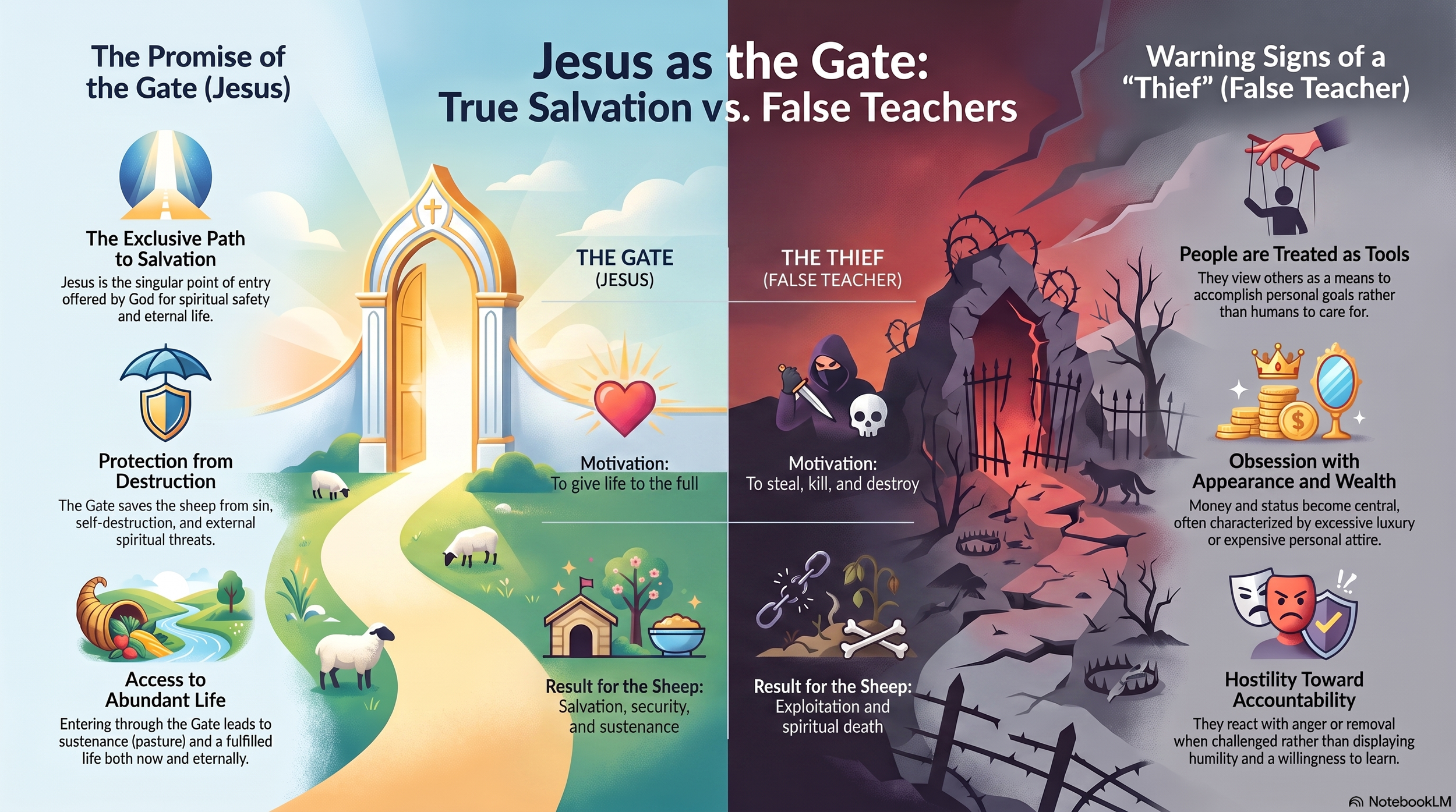
Study Guide: Jesus as the Gate (John 10)
This study guide provides a comprehensive review of the teaching regarding John chapter 10, focusing on Jesus' "I am" statement where he identifies himself as the gate for the sheep. The materials analyze the distinctions between true spiritual leadership and false teachers, the nature of salvation, and the practical application of these biblical metaphors.
Short-Answer Quiz
Instructions: Answer the following questions in 2–3 sentences based on the information provided in the source context.
What is the specific biblical context and audience for Jesus’ teaching in John 10?
How does Jesus distinguish between a true shepherd and a "thief and a robber" regarding entry into the sheep pen?
According to the transcript, why are Bible verses not displayed on a screen during this teaching?
What does it mean when a teacher views other humans as a "means to an end"?
How is the "Preachers in Sneakers" Instagram feed used to illustrate a sign of a false teacher?
Why can a teacher with "good theology" still be considered a thief or a robber?
In the context of the sheep pen analogy, what is the role of the "gate" regarding the safety of the sheep?
According to the speaker, who are the "thieves and robbers" specifically referring to in this passage?
What are the three things the speaker claims Jesus saves a person from?
Explain the significance of the "pasture" mentioned in John 10:9.
Answer Key
Context and Audience: Jesus is speaking to the Pharisees and religious leaders following a discussion about their unwillingness to believe in him. While addressing these leaders specifically, the text notes that a larger crowd of people was also present and listening to the exchange.
Entry into the Pen: A thief or robber is characterized as someone who does not enter by the gate but instead climbs over the fence or enters by "some other way." In contrast, the true shepherd enters legally through the gate, which is opened for him by the gatekeeper.
Screen Usage Policy: The speaker intentionally avoids putting verses on the screen to encourage the audience to become more comfortable and familiar with the Bible. The act of manually opening a book or scrolling through an app is viewed as a vital part of the learning process.
Means to an End: This occurs when a leader uses people primarily as tools to accomplish a goal or a ministry objective. Instead of caring for the "sheep" (the people), the leader is only interested in the "wool" (what the people can provide or achieve for them).
Appearance and Wealth: This example illustrates a preoccupation with appearance and expensive material goods, such as $20,000 shirts or rare sneakers. It highlights a potential red flag when a leader’s lifestyle and focus on money contradict their message of spiritual service.
Theology vs. Life: A teacher may have a statement of faith that is biblically accurate but live a life that points people toward a false gospel or their own ego. Paul’s advice to Timothy is cited to show that a leader must be an example in both doctrine and their personal life.
Safety of the Sheep: The gate serves as a protective barrier that saves the sheep from predators such as lions, bears, and wolves. By closing the pen, the gate ensures the sheep are not killed or destroyed by those who wish them harm.
Identity of the Thieves: While many interpret the "thief" as Satan, the specific context of John 10 identifies the thieves and robbers as false teachers. These are leaders who attempt to lead people to life but ultimately point them toward death and destruction.
Nature of Salvation: The speaker identifies that Jesus saves individuals from themselves (being their own worst enemy), from the controlling influence of the world’s values (power and money), and from sin and condemnation before a holy God.
Significance of Pasture: The pasture represents sustenance and the provision of life, both in the present and the future. It connects to Jesus' previous "I am" statement about being the "bread of life," indicating that those who enter through the gate will be fed and sustained in a "busted up" world.
Essay Questions
The following questions are designed for deeper reflection and extended response. No answers are provided.
The Ethics of Leadership: Examine the five signs of a "false teacher" provided in the text. How do these signs emphasize the character of the leader over their public oratory or theological claims?
The Gate vs. The Shepherd: The speaker notes that in this specific section of John 10, Jesus focuses on being the "gate" rather than the "shepherd." Analyze the unique theological implications of the "gate" metaphor regarding access, protection, and exclusivity.
Modern Challenges to Discernment: Discuss how the shift from localized teaching to the "age of podcasts and the internet" has changed the way individuals must evaluate spiritual teachers. What new risks does the speaker identify in this digital landscape?
The Tenses of Salvation: The text describes salvation as something that has happened, is happening, and will happen. Explore how this multifaceted view of salvation differs from a purely "afterlife-focused" perspective.
Conflict and Humility: Contrast the reaction of a "thief or robber" when challenged with the reaction of a humble leader. How does a leader's response to criticism serve as a barometer for their spiritual health?
Glossary of Key Terms
Term
Definition
"I Am" Statements
A series of seven declarations in the Gospel of John where Jesus uses the phrase "I am" followed by a metaphor to describe his identity and mission.
Pharisees
The religious leaders Jesus addressed in John 10 who were criticized for their spiritual blindness and role as "thieves and robbers."
Sheep Pen
A literal and metaphorical enclosure used to protect sheep; in the teaching, it represents a place of safety and salvation provided by God.
The Gate
The specific metaphor Jesus uses for himself in John 10:7, identifying himself as the only legitimate entrance to salvation and life.
Thieves and Robbers
Terms used by Jesus to describe those who came before him or attempt to lead the sheep without using the gate; specifically identified as false teachers.
False Teacher
A leader who may use biblical language or have good doctrine but leads people away from Jesus and toward themselves, money, power, or death.
Pasture
A metaphor for spiritual sustenance and life; the nourishment provided to the sheep once they have entered through the gate.
Salvation
The act of being delivered from sin, condemnation, the influence of the world, and self-destruction; described as an ongoing, moment-by-moment process.
Doctrine
The set of beliefs or teachings held by a church or leader; the text argues doctrine must be matched by a godly lifestyle.
Salvific Studies
The theological study of the concept and process of salvation.
Life to the Full
The promise found in John 10:10 that Jesus came to provide an abundant life, contrasted with the destruction brought by the thief.
